FAQ | Armenian Duduk

Everything you want to know about the Armenian duduk — answered

🎵 The Instrument

All our duduks are handcrafted from aged apricot wood (Armenian: ծիրանի փայտ). Apricot wood is the only material that produces the authentic, warm, and soulful tone the Armenian duduk is famous for. The wood is carefully selected and seasoned for years before use.
Traditional Duduk — the standard instrument used in solo and ensemble performances. The most common choice for beginners and professionals alike.

Dam Duduk — played as a drone accompaniment. It sustains a single note to support the melody duduk, creating the iconic two-part sound of Armenian music.

Bass Duduk — a larger, lower-pitched version of the instrument, ideal for deep, resonant tones in ensemble or studio settings.
Our traditional duduks are available in multiple keys: A, B♭, G, C, D and others. The most common and traditional key is A. Please specify your preferred key when placing your order, or contact us for advice on which key suits your needs.
Yes, every duduk comes with at least one reed (Xamish). We recommend keeping spare reeds as they are the most sensitive and perishable part of the instrument. Extra reeds can be ordered separately — please contact us for availability.
Duduks with valves (also called key-system duduks) are fitted with mechanical keys similar to those found on clarinets or oboes. The valves enable faster fingering, cleaner transitions between notes, and easier access to chromatic passages. They are popular among professional musicians who perform in diverse musical contexts.

🛒 Ordering

Yes! The Traditional Duduk in A is ideal for beginners. It comes ready to play and produces a beautiful sound even for those just starting out. The duduk has a relatively gentle learning curve compared to other reed instruments — within a few weeks of practice most beginners can produce a full, rich tone.
Yes. Arthur Grigoryan crafts custom instruments on request. You can specify the key, finish, size, and other preferences. Custom orders typically take 2–6 weeks. Please contact us to discuss your requirements and receive a quote.
We accept bank transfers, PayPal, and other payment methods. Please contact us to confirm availability for your country and to arrange payment details before your order.

📦 Shipping

We ship worldwide from Armenia. Delivery typically takes 1–3 weeks depending on your destination country and local customs. All instruments are professionally packaged to ensure safe transit. Tracking information is provided once your order has been dispatched.
Yes — all orders include free worldwide shipping. There are no hidden shipping fees. The price you see is the price you pay.
Import taxes and customs duties may apply depending on your country's regulations. These fees, if any, are the responsibility of the buyer and are not included in our price. We recommend checking with your local customs office before ordering.

Playing & Care

Storage: Keep the duduk in a dry, room-temperature environment away from direct sunlight and heat sources.

After playing: Gently dry the inside of the bore with a soft cleaning rod or cloth to remove moisture.

Reed care: Moisten the reed for a few minutes in water before playing. Never force a dry reed.

Wood care: Lightly oil the exterior with natural wood oil (almond or walnut oil) once or twice a year to prevent cracking.
The reed (blul) is the most delicate part of the instrument. Always soak it in water for 3–5 minutes before playing. After use, let it dry naturally at room temperature — never force-dry it. Store reeds in a protective case when not in use. A well-maintained reed can last several months with regular use.
Compared to many reed instruments, the duduk is considered accessible for beginners. Most students can produce a pleasing tone within the first few practice sessions. Mastery of the instrument's unique ornaments and circular breathing techniques takes years — but the early stages are very rewarding. Online tutorials and local teachers can accelerate your progress.

🎖️ Heritage

Yes. The Armenian duduk and its music were inscribed by UNESCO in 2005 as a Masterpiece of the Intangible Heritage of Humanity. It is one of the oldest surviving double-reed wind instruments in the world, with a history spanning over 3,000 years.
Arthur H. Grigoryan (-GHA-) is the son of the legendary duduk maker Hovsep Grigoryan (-OMO-). He has been crafting musical instruments since 1997, continuing and expanding his father's legacy. Many of today's greatest dudukists — including the world-renowned Djivan Gasparyan — play instruments made exclusively by Arthur. Each instrument is handcrafted from carefully selected, aged apricot wood.
Hovsep Grigoryan (-OMO-, 1928–2004) dedicated over 50 years of his life to crafting Armenian folk instruments — duduk, zurna, shvi, and others. His pursuit of the perfect original sound of the duduk set a standard that many have sought to replicate. His legacy continues to resonate through the instruments he created, cherished by musicians worldwide.

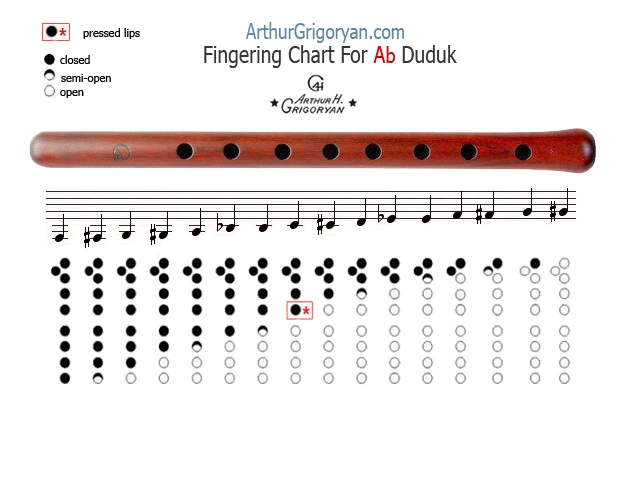
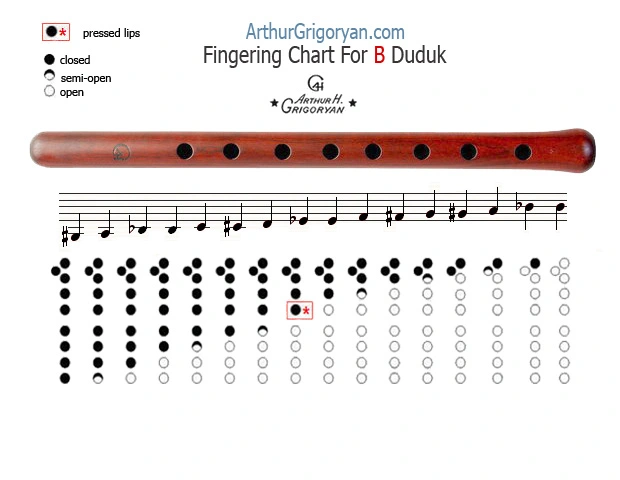
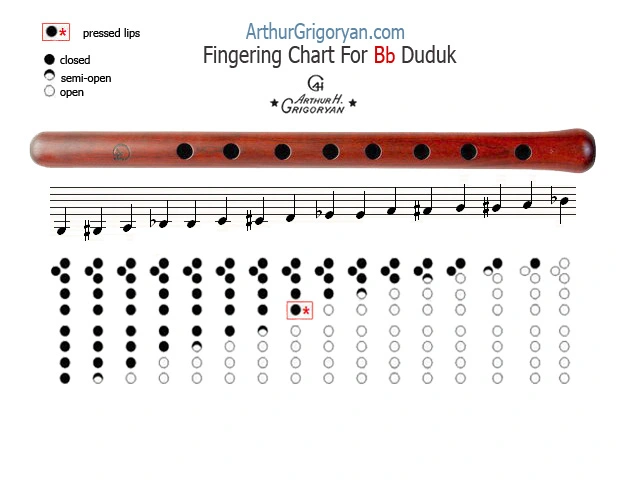
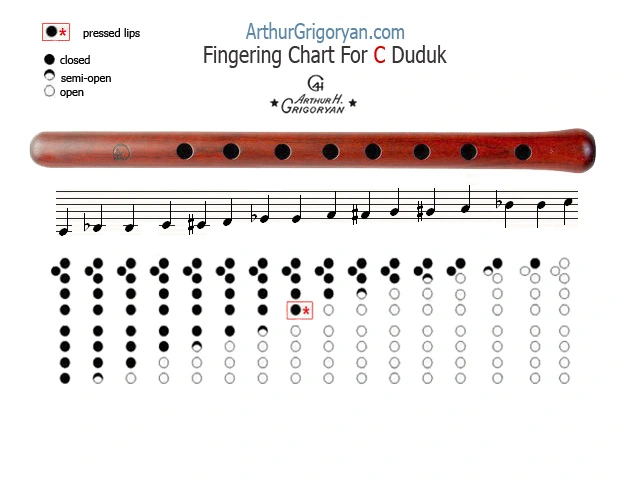
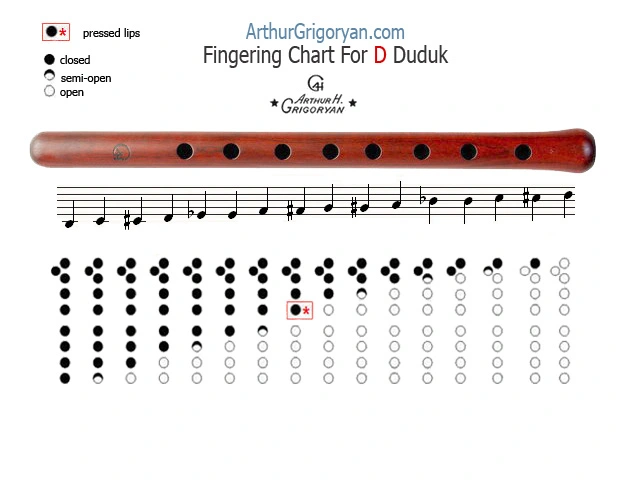
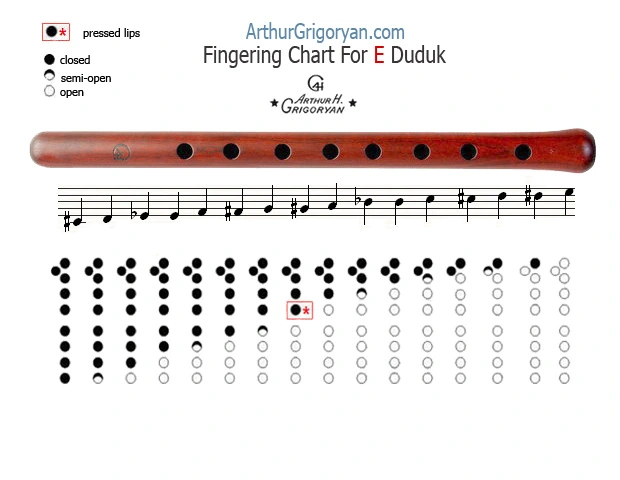
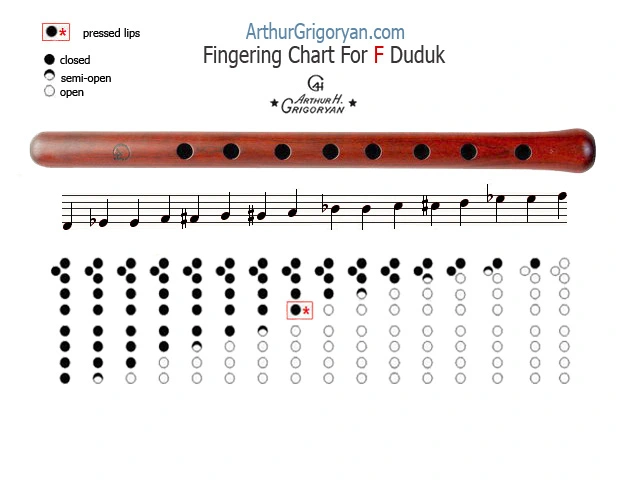
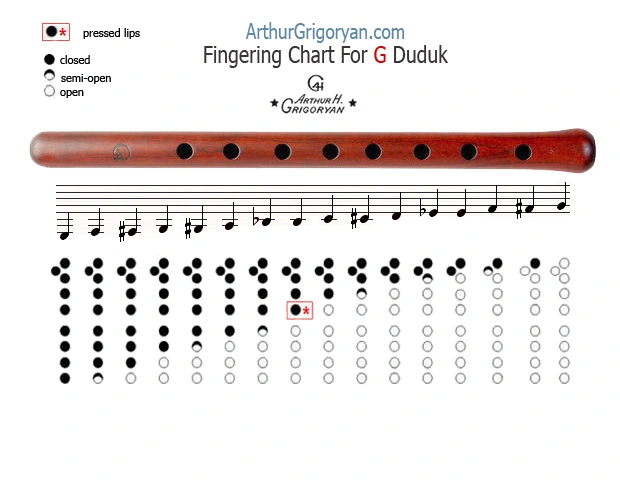
🎵 Duduk Fingering Chart

Essential reference for beginners and professionals — standard finger positions for the Armenian duduk
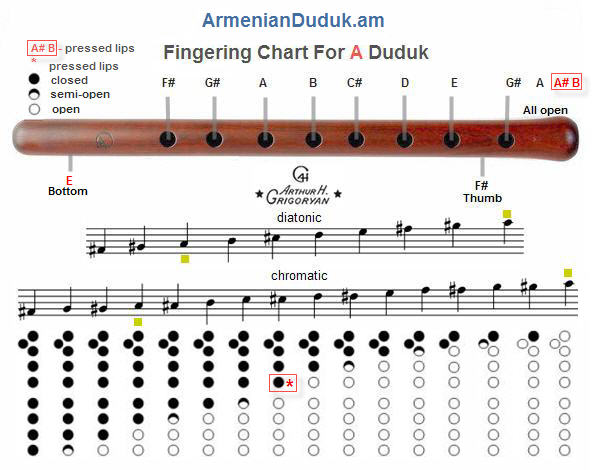
Duduk fingering chart key A
Key A
Duduk fingering chart key Ab
Key A♭
Duduk fingering chart key B
Key B
Duduk fingering chart key Bb
Key B♭
Duduk fingering chart key C
Key C
Duduk fingering chart key D
Key D
Duduk fingering chart key E
Key E
Duduk fingering chart key F
Key F
Duduk fingering chart key G
Key G

Still have questions?

We are happy to help. Reach out to us directly and we will reply as soon as possible.

Contact Us